
.png)
Ai, Art, And The Myth Of Theft
AI, Art, and the Myth of Theft: An Educational Perspective
There is a growing misconception that artificial intelligence is “stealing art.” While the concern often comes from a place of protecting creativity, the argument itself is rooted in a misunderstanding of both technology and artistic history.
To understand where the confusion begins, we need to look backward.
From CGI to AI: What Changed?
Long before “AI art” became a charged phrase, the term CGI—Computer Generated Imagery—was widely accepted. If you’ve ever watched a Marvel movie, a fantasy film, or a science‑fiction epic, you have consumed and supported computer‑generated art. Entire worlds, characters, environments, and effects were built digitally using software, algorithms, and artist‑guided tools.
What changed is not the existence of computer‑generated art—but the terminology.
Today, AI is used as a broad umbrella term for a wide range of digital tools that assist creation. In many cases, it simply refers to software designed to enhance, automate, or improve creative workflows. This is no different in principle than tools artists have used for decades.
Photoshop is a perfect example.
A heavily edited photo used to be called “photoshopped.” Now, that same image is often labeled “AI,” even when the process is manual, intentional, and guided by a human hand. The label shifted—but the process did not.
AI Does Not Mean Automatic Theft
AI does not copy an artist’s work stroke for stroke. It does not store images in a vault and reproduce them on command. It analyzes patterns, relationships, lighting, composition, and structure—much like a human artist studies references, movements, and techniques.
If learning from existing art were theft, then every artist influenced by Gothic architecture, religious iconography, punk aesthetics, occult symbolism, or historical art movements would be guilty. Creativity has always evolved through influence.
The ethical discussion worth having is about transparency and intent—not fear‑based assumptions.
How This Applies to Sigil Occult Jewelry
At Sigil Occult Jewelry, our design ethics are clear and unchanged.
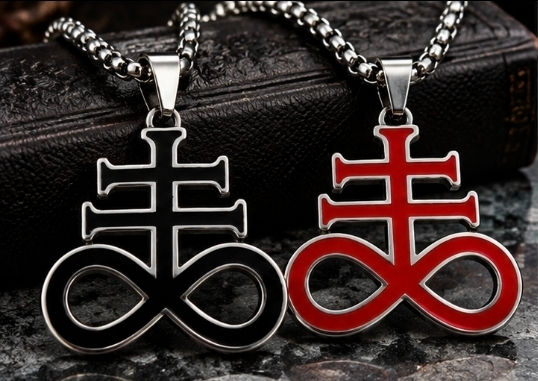
We use our own original product photography. Every piece you see begins with a real item we designed, sourced, and offer for sale. We then use digital software—tools that have existed for years—to design environments, settings, lighting, and atmosphere around those products.
This is not new. This is modern marketing.
We also work with real human models who wear our brand. In the past—and still on occasion—we’ve collaborated with social media influencers and customers who tag us or submit photos wearing Sigil pieces. When we repost those images, we clearly credit them, ask permission, and often share their profiles with our audience. It has always been acceptable to say no, and we respect that fully.
That practice hasn’t disappeared.
What has evolved is our creative direction.
Evolving Quality, Not Abandoning Community
As Sigil Occult Jewelry grows, so does our commitment to higher‑quality visuals and professional presentation. We are moving toward more advanced digital imaging, refined Photoshop work, and creative tools that elevate our storytelling—using the same core principles we’ve always followed:
Original products
Ethical sourcing of images
Transparent crediting
Respect for artists, models, and customers
We still welcome tags. We still celebrate our community. We still share and support those who support us.
What we refuse to do is limit creativity out of fear of misunderstood terminology.
Final Thoughts
AI is not a replacement for artists. It is not the death of creativity. It is not theft by default.
Like every tool before it, AI is shaped by the intent of the person using it.
At Sigil Occult Jewelry, we choose intent, ethics, transparency—and evolution.
Because art has never stood still. And neither will we.



Comments